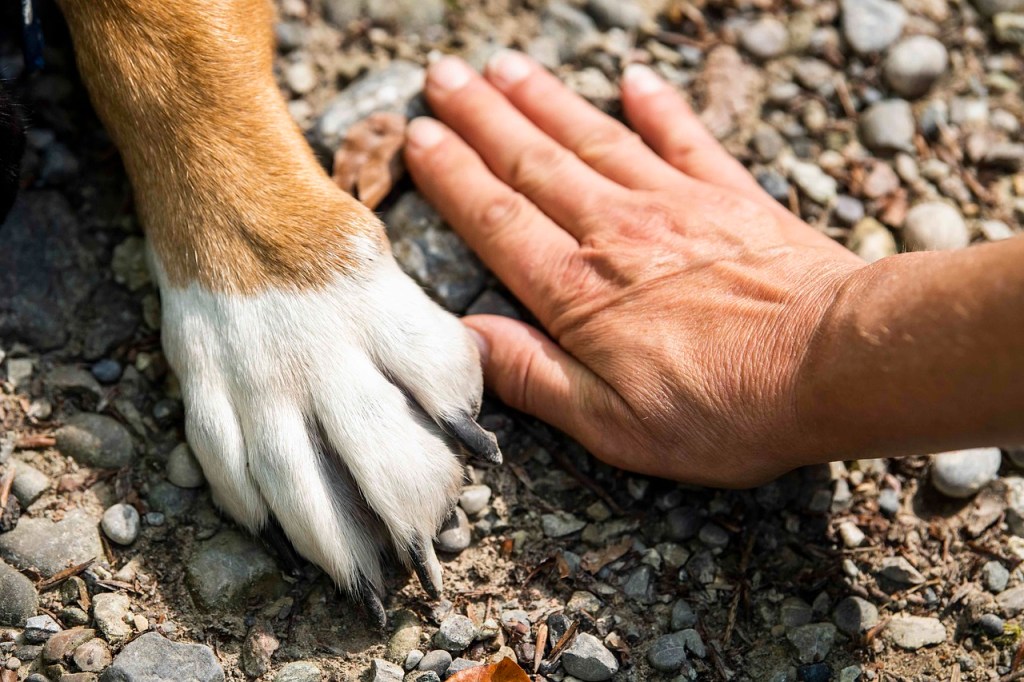
Taking care of a dog’s paws in winter seems obvious. In contrast, paw care in summer is often neglected – even though hot surfaces pose a real challenge to paw pads and claws. Find out how to protect, relieve, properly clean, and care for your dog’s paws during the hot season.
- Protecting and Caring for Dog Paws in Summer
- Dangers for Dog Paws in Summer
- Proper Care and Protection for Dog Paws in Summer – Step by Step
- “Dogs didn’t need paw care in the past!”
- First Aid for Sore or Burned Dog Paws
- Be Considerate – Protect More Than Just the Paws
Protecting and Caring for Dog Paws in Summer
Every summer, I’m surprised to see how many more people in my neighborhood actually own dogs. All of a sudden, dog owners appear with their pets, let them run alongside bikes, go jogging, or stand around in groups while the dogs stand by, equally bored.
You even start seeing dogs in supermarket parking lots.
And this always seems to happen right when the sun is blazing and asphalt, pavement, and gravel are heating up like frying pans.
Every summer, I see dogs that refuse to walk, walk hesitantly, or limp – only to be scolded by their owners. I also see dogs forced to walk anyway, ending up with burned paws and blisters – often unnoticed by their oblivious humans.
If you don’t want to be part of that group and would rather spare your dog unnecessary pain, you’ve come to the right place. Here are the most important tips for paw protection and paw care in summer.
Dangers for Dog Paws in Summer
Some dog owners are already aware that snow, ice, road salt, and grit can harm their dog’s paws, requiring special care.
But in summer, paw pads and claws are often overlooked—despite the many risks and stresses that can lead to injury. These risks include:
- Pressure sores from burrs, pebbles, and other foreign objects
- Parasites like mites and ticks
- Punctures from thorns
- Cracks due to dry skin
- Burns from hot surfaces (even leading to blisters)
Open wounds, cracks, or pressure sores can lead to infections and significant pain—just like burns do. If you’ve ever walked with a stone in your shoe, an open wound, or a corn on your foot, you know the word “uncomfortable” doesn’t even begin to describe it.
Don’t let your dog experience the same. Here’s a step-by-step guide to help you prevent it.
Proper Care and Protection for Dog Paws in Summer – Step by Step
The sun is shining, temperatures are rising, and nature is bursting into life – spending time outdoors is tempting. Long walks, trips to the lake, or a shady forest are great ways to relax.
However, your dog’s paws face challenges during these activities that can lead to injury. This guide helps you prevent problems.
Step 1: The Right Equipment for Paw Care
Paw care is especially important during extremely hot weather, when natural, paw-friendly surfaces are scarce—and you’re not always walking only early in the morning or late at night.
You don’t need much equipment to care for and protect your dog’s paw pads:
- Well-fitting dog boots with insulating soles
- Nail clippers
- Paw balm or paw spray
- Paw scissors
- Soft washcloth
You’ll learn how to use each of these tools in the following steps.
Step 2: Trim That Hair!
Not just long-haired breeds grow fur between their paw pads. This causes several year-round problems:
- Dirt: Mud, dust, and waste from other animals easily stick to long fur.
- Foreign Objects: Thorns, pebbles, burrs, twigs, gum – all get stuck more easily between the toes and can cause pressure sores, puncture the skin, or be painfully pulled out.
- Parasites: Mites, fleas, ticks – even worm eggs and giardia – can cling to the paw hair, increasing the risk of infection and skin issues.
- Trapped Heat: Dogs don’t regulate body temperature only through panting. Fur length and paw conditions also play a role. Matted fur between paw pads traps heat and adds to summer stress.
- Tangles and Matting: The longer the fur between the pads, the more likely it is to knot or mat. Removing it can be painful and lead to pressure sores.
Why I recommend paw scissors: They’re curved with rounded tips – ideal for safely trimming between paw pads without risking injury.
Step 3: Easy Cleaning
Cleaning your dog’s paws daily has many benefits – and becomes easier once your dog gets used to it:
- Early Detection: Regular cleaning helps spot injuries, foreign bodies, or overgrown hair early.
- Better Hygiene: Your dog will lick fewer harmful substances or parasites off their paws.
- Preparation for Care: Clean skin is the best foundation for applying care products.
How to clean:
The easiest way is to rinse the paws off with water. This removes dirt and foreign matter quickly.
You can also use a shallow bowl or a human foot bath – or just wipe with a damp washcloth. Use shampoo only for stubborn dirt, and rinse thoroughly.
Step 4: Balm for Body and Soul
Special paw balms or sprays keep the skin on the pads supple – reducing the risk of cracks and chafing.
Look for non-greasy products that absorb quickly. Panthenol and apricot kernel oil work well—they don’t make fur or floors slippery, but strengthen the paw pads.
Massage the balm in for a few seconds. This adds a cuddly bonding moment and desensitizes your dog to having their paws touched – which helps with future nail trimming too.
Step 5: Prioritize Paw Protection
The sun’s out, the temperature’s climbing, and the sky is bright blue. Summer is lovely – but it has serious downsides.
One of them is how hot the ground gets. Asphalt, concrete, pavement, gravel – they can all become so hot in the sun that even brief contact is painful and causes burns.
A true story:
On a 33°C day, I had to run to the store. The heat was unbearable; the air shimmered above the pavement like I was walking on stovetops.
While rushing to get into the shade – even in shoes – I saw an elderly couple slowly crossing the parking lot with a poodle. The dog was hopping awkwardly behind them, getting scolded for not walking properly.
I called out, “Quick, pick up your dog!” The woman did lift him, but when I calmly explained the danger, the man laughed it off.
Even though the dog already had a visible blister, the man insisted the hot stones weren’t to blame. “Animals can handle it. Wolves do too,” he said.
I asked if he’d ever seen any animal walking over scorching stones at noon. Not even birds were out – because they were smart enough to stay in the shade.
Eventually, I told him: “Take off your shoes and put your hand on the ground.” He flinched – but still insisted animals weren’t affected like we are.
But they are. Burns hurt, not just in the moment—but for a long time after.
So, here’s my plea to you:
Do the barefoot test. Before walking your dog, press your bare foot or palm to the ground for 5 seconds. Is it hot and painful – or just warm?
Your dog has to endure that heat with every step. And it only gets hotter as the day progresses.
The safest option: use dog boots. Make sure they fit well, are comfy, secure, and insulated from below.
And don’t give up right away if your dog walks funny at first or tries to shake them off. If you can’t switch to grass or dirt right after leaving the house, boots are a must. They also keep paws—and your floors – cleaner.
“Dogs didn’t need paw care in the past!”
That may be true – but for several reasons, they also didn’t really need it back then:
- Surfaces: Fields, forests, meadows – natural surfaces don’t heat up like urban pavements. Today’s environments (city sidewalks, concrete paths) trap and radiate heat.
- Lifestyle Changes: Dogs used to work outdoors as guard dogs or herders, and lived on natural ground. They didn’t attend dog school or go to cafés.
- More Conscious Ownership: We now better understand dogs’ emotions and needs. Health and preventative care – including paw care – are more of a priority.
No – dogs weren’t “tougher” in the past. Things have simply changed, and so should we. Better knowledge means better care.
First Aid for Sore or Burned Dog Paws
Prevention is key. But if you notice redness, cracks, blisters, or open wounds, immediate action is needed.
Start by gently cleaning and cooling the affected area. The best method is running cool (not cold!) water over the paw for several minutes.
Cool compresses or cold packs are alternatives – but don’t clean the wound. Since paws are always exposed to dirt and germs, cleansing is crucial.
If the skin is just red or irritated, paw balm, panthenol spray, and rest are usually enough.
For blisters or open wounds, wrap the paw gently in sterile gauze and see a vet.
Be Considerate – Protect More Than Just the Paws
Paw protection on hot surfaces is essential—but not the only summer concern.
Water, shade, avoiding midday heat, and reducing activity levels are just as important as quick cooling when needed. Learn more in the guide:
“Summer, Sun, Heatstroke – How to Protect Your Dog During Summer.”
 PunkRockPudel
Hinterlasse einen Kommentar