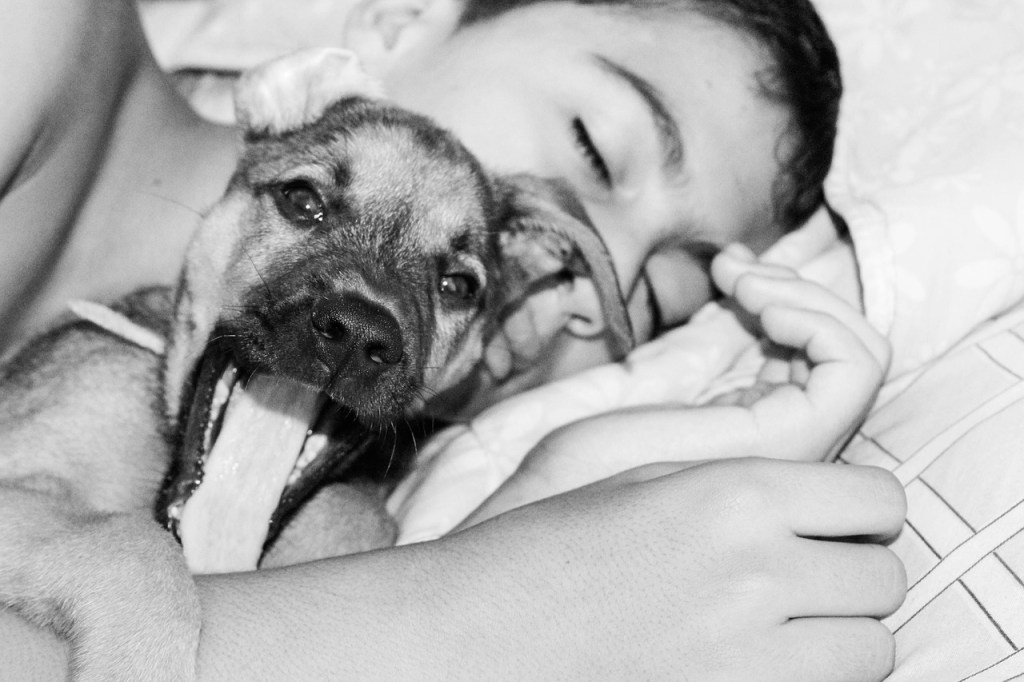
Your dog wanders around at night, constantly needs to go outside, is restless, pants, barks, or licks themselves? If your dog doesn’t sleep through the night, it can really strain your nerves. At the same time, there can be many valid reasons behind it that you can address with the right knowledge.
- Why Doesn’t My Dog Sleep Through the Night? The Reasons
- 6 Proven Tips to Help Your Dog Sleep Through the Night
- Did You Know? Dogs Sleep Differently Than Humans!
Why Doesn’t My Dog Sleep Through the Night? The Reasons
Is your dog simply bored or in pain? If your four-legged friend keeps disrupting your sleep, identifying the root cause is the first and most important step.
Because: Even though your dog might be annoying you, it’s not doing it on purpose.
Instead, a variety of factors could be at play – from dogs’ naturally shorter sleep cycles, which differ significantly from humans’, to fear and anxiety.
So let’s take a look at the possible causes!
Lack of Stimulation and Too Much Sleep
There are all sorts of absurd claims online about how long dogs should sleep. In the article “How Long Do Dogs Really Sleep? A Surprising Answer”, I explain not only that adult dogs sleep just 12 to 14 hours a day, but also how and why their sleep differs from humans‘.
If your dog sleeps for 12 to 14 hours spread throughout the day, that means they’re awake for 10 to 12 hours. And more should happen during that time than just three short walks. Otherwise, your dog is under-stimulated and simply not tired enough to sleep through the night.
Lack of Bladder Control
Puppies, sick, and older dogs have reduced bladder control and often feel the need to relieve themselves more frequently. While puppies eventually grow out of it, medications can help strengthen the bladder in seniors and ill dogs.
Anxiety and Stress
Your dog knows your home, you, and the environment – so why on earth would they feel anxious or stressed at night when everything is quiet?
Because:
- It’s dark
- You’re asleep and no longer their protector
- Nighttime noises can be unsettling
Think of camping: no one should be afraid, but the rustling in the bushes in the dark can still be spooky. Many people jump at the slightest sound – and the same goes for dogs.
Pain and Illness
Pain, illness, and discomfort can cause your dog to be restless. They may pace constantly, change sleeping spots frequently, lick or smack their lips often. These behaviors might not even be noticeable during the day.
Just like with humans, discomfort often worsens for dogs in the evening or at night – partly because there are fewer distractions.
Unsuitable Sleeping Spot
Ever tossed and turned in bed because you couldn’t find a comfortable position? Because it was too hot or too cold, too soft or too hard? Your dog can feel the same way.
Lack of Closeness
Dogs are not solitary animals. They are social beings who seek the company of others – including at night. If your dog isn’t allowed in your bed or even your bedroom, that may be why they aren’t sleeping through the night.
Too Many Stimuli
You might perceive the night as calm and quiet – your dog certainly doesn’t. With the background noise of daily life gone, other sounds stand out more. Combine that with a dog’s excellent hearing, and your pup is bombarded with stimuli — a neighbor’s car door, raccoons rustling, snoring from three houses down, or a cat passing through the yard.
6 Proven Tips to Help Your Dog Sleep Through the Night
Now that you know the potential causes, here are some specific strategies you can try:
Veterinary Check-Up
Does your dog lick, smack, change spots frequently, need to go out multiple times, or generally seem restless at night? Then a vet visit is urgently needed. It’s essential to check for pain, intolerances, and address any other issues like incontinence or heartburn.
Ensure Adequate Stimulation
If your dog is expected to stay calm all day and only gets three short walks, it’s no wonder they can’t sleep at night — they’re simply bored and under-stimulated. Luckily, it’s easy to change that.
Here’s how you can help:
- Gradually lengthen and diversify your walks.
- Stimulate your dog mentally with search games, teaching tricks, obedience training, dog dancing, or agility.
- Make sure they can entertain themselves — for example, with (interactive) toys or safe chew items.
Establish a Consistent Routine
Routines provide security and structure, helping your dog to physically and mentally adapt to a daily rhythm.
A natural sequence looks like this:
- Movement and activity
- Eating
- Rest or sleep
So, take your dog for a long or challenging walk, practice some commands or play, then feed them or give them a chew, and only then settle down. Once your dog gets used to this rhythm, they’ll likely rest on their own.
To support nighttime sleep, take a longer walk in the evening, offer a meal and maybe a filled Kong, a carrot, or a rabbit ear to chew on. The last bathroom break can then be a quick potty trip before you both go to bed.
Adjust the Sleeping Spot
An uncomfortable bed can disrupt both your sleep. Compare your dog’s favorite daytime napping spots to their bed in the bedroom. If they wouldn’t voluntarily use it during the day, there’s likely a good reason.
Important factors:
- Enough space and variety:
Your dog needs to be able to change positions when it gets too hot, cold, soft, or hard. - A comfy surface:
Think of an orthopedic dog bed in the right size — especially one your dog uses voluntarily elsewhere. - Observe preferences:
Some dogs prefer corners, dens, or raised spots. Others just want to stretch out or be close to you. Create several options and see which your dog chooses most often.
It might sound like extra work, but giving your dog the choice can save you many sleepless nights.
Allow Closeness
Some dogs prefer sleeping alone in the living room or hallway. But they are the exception, not the rule. Most dogs want to sleep near their humans — even in bed, if allowed.
This can actually improve sleep, because:
Physical contact is a powerful calming tool.
Cuddling up to you can help your dog sync with your sleep cycle, sleep longer, and feel more secure.
For more info, see the article: “Should I Let My Dog Sleep in My Bed?”
Provide Calm and a Sense of Security
Does your dog wake up frequently or bark at night? They hear much more than you do. To protect both your sleep, try reducing disruptive sounds or masking them.
Close windows and doors at night. In noisy homes, improve soundproofing with thick curtains, carpets, or acoustic panels — these help more than just your dog’s sleep.
You’ll find more ideas in the article: “15 Tips to Help Your Dog Feel More Secure.”
Did You Know? Dogs Sleep Differently Than Humans!
Dogs sleep shorter and more lightly than humans. Matching our full-night sleep cycle is a challenge for them – especially if they’re not properly stimulated during the day.
But with a few simple changes, you can help your dog sleep more peacefully and maybe even through the whole night.
 PunkRockPudel
Hinterlasse einen Kommentar