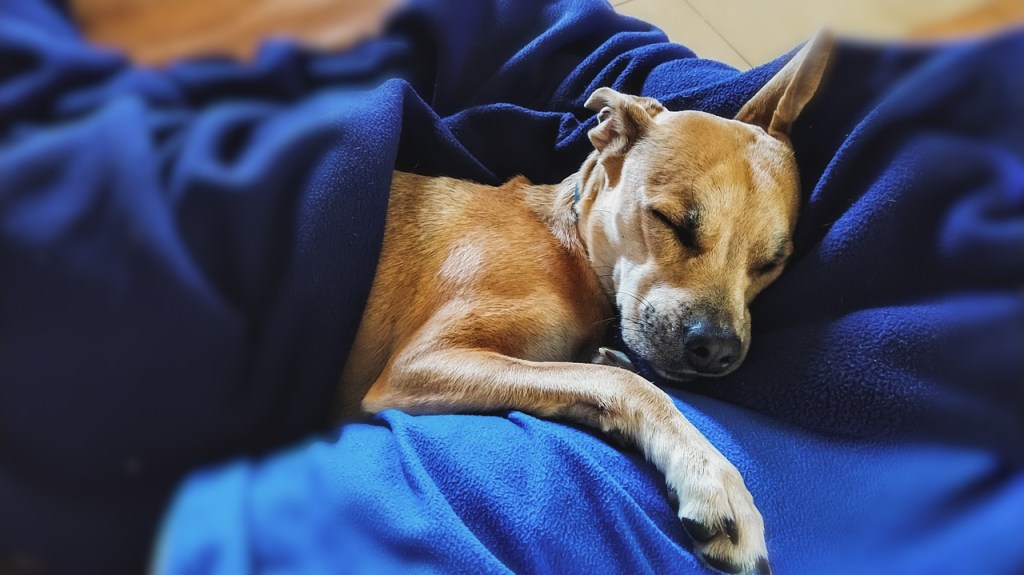
There are some wild claims on the internet when it comes to how long dogs sleep. These can cause confusion and even lead some owners to force their dogs to rest unnecessarily. Here you’ll find out how long dogs really sleep, why their sleep is different from humans‘, and most importantly—what that means for you.
- How Many Hours Do Dogs Sleep per Day?
- Sleep Phases in Dogs and Humans
- How Does Dog Sleep Change Over a Dog’s Lifetime?
- Why Doesn’t My Dog Sleep Through the Night?
- What Affects a Dog’s Sleep Duration?
How Many Hours Do Dogs Sleep per Day?
Puppies (8 weeks old) need around 15 hours of sleep.
Adult dogs sleep 12 to 14 hours per day.
Some so-called “experts” claim that eight-week-old puppies should sleep for 18 to 22 hours—a myth that continues to spread through copy-pasted articles, trainers, and dog owners.
If my puppies were sleeping 22 hours a day, I’d be panicked and heading straight to the vet – because that’s neither normal nor healthy.
Experiences from various breeders show:
Healthy puppies sleep and rest around 15 hours a day at two months old.
Similarly absurd claims are made about adult dogs—up to 18 hours of deep sleep per day. That might be necessary for an 18-year-old dog, a poorly nourished one, or a sick pet.
But a healthy, fit adult dog in its prime actually needs only 12 to 14 hours of sleep on average.
They still sleep significantly more than humans. But that’s not the only difference in sleep patterns and phases between dogs and people.
Sleep Phases in Dogs and Humans
Humans go through several phases while sleeping, including:
- Falling asleep
- Light sleep
- Deep sleep
- REM sleep (dream phase)
These four stages make up a sleep cycle. We start with light sleep, making us easy to wake. This shifts into deep sleep, where outside stimuli are blocked out (like sleeping through an alarm). In REM sleep, brain and body activity increase again, sleep becomes lighter, and we nearly wake up.
One full cycle lasts about 90 minutes and repeats several times each night.
Dogs go through the same phases, but with two major differences:
- A dog’s sleep cycle only lasts 45 minutes.
- Their sleep is more evenly distributed throughout the day.
The shorter phases make evolutionary sense. In the wild, deep sleep only lasts a few minutes, so dogs are only vulnerable for a short time. The rest of the time, they’re easy to wake—ready to flee or defend themselves.
In today’s safe, indoor environments, these differences between human and canine sleep can sometimes become disruptive.
How Does Dog Sleep Change Over a Dog’s Lifetime?
Puppies sleep more throughout the day, but in shorter intervals. They usually experience only one to three 45-minute sleep cycles at a time. As they age, they go through more cycles in a row.
This is partly due to development. Like human babies, puppies can only eat small amounts at a time. They digest quickly and get hungry again soon. They also need to relieve themselves more often.
Additionally, their nervous system and tolerance for stress are still developing. What’s normal and manageable for adult dogs or humans can be overwhelming for young ones. So puppies and children need frequent breaks to process stimuli and recharge.
As dogs age, their physical resilience decreases again, and they get tired more easily. That’s why senior dogs often sleep significantly more. How long they can sleep in one go depends on factors like bladder control.
Why Doesn’t My Dog Sleep Through the Night?
Because of their shorter sleep cycles – and frequent need to urinate in puppies and seniors – it’s hard for dogs to sleep as long and uninterrupted as an adult human.
In fact, it’s often unnatural and exhausting for them to stay inactive that long.
BUT: Sleep needs can vary individually, and there are many ways to help your dog sleep longer. You can find tips in the article “Why Doesn’t My Dog Sleep Through the Night? Causes and Solutions.”
Here’s an overview of what can affect your dog’s sleep and sleep duration:
What Affects a Dog’s Sleep Duration?
You already know some key factors like age, bladder control, and hunger. But many more things – both directly and indirectly – impact how much and how well dogs sleep. These include:
- Age
- Physical and mental activity
- Bed quality
- Feeding schedule
- Environmental noise
- Health status
- Habits and routine
- Physical closeness
- Breed
- Temperature
In short: Dogs are influenced by many of the same sleep-related factors as humans. That’s why it’s so important to prevent disruptions and recognize problems early – so you can fix them.
For the sake of both your good night’s sleep.
 PunkRockPudel
Hinterlasse einen Kommentar