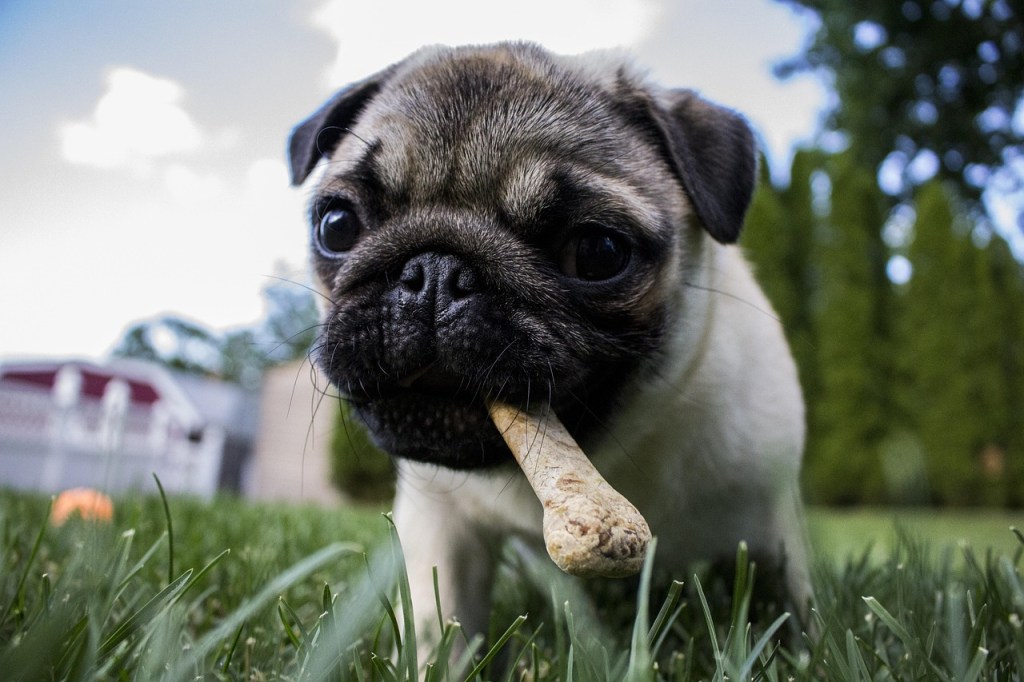
You really wanted a puppy – and now it’s driving you insane? Our tips will help you relax and find solutions to common problems, give you back your sanity and make live easier on you and your dog.
- Puppy Is Driving Me Crazy – Common Problems
- Tip 1: Change Your Perspective
- Tip 2: Adjust Your Expectations
- Tip 3: See It as a Process
- Tip 4: Puppy-Proof Your Home
- Tip 5: Take Breaks
- Tip 6: Understand Your Puppy’s Needs
- Puppy Is Driving Me Crazy – Remember Why You Wanted a Dog
Puppy Is Driving Me Crazy – Common Problems
Were you super excited about getting your puppy, but now it’s just driving you up the wall? You’re not alone. Whenever people feel overwhelmed by their puppy or new dog, it’s usually due to the following issues:
- Puppy follows me everywhere
- Puppy chews on everything
- Puppy constantly needs to go outside
- Puppy bites me
- Puppy is “hyperactive”
- Puppy doesn’t want to go for walks
- Puppy is limiting my freedom
Let’s take a closer look at these challenges – and the possible solutions.
Puppy Follows Me Everywhere
“My puppy follows me around all the time! What should I do?”
When people describe this situation, I keep asking: What exactly is the problem?
Your puppy follows you. So what? Is it stopping you from going to the bathroom, showering, cooking, making phone calls, answering emails, collecting the mail, vacuuming, mopping, or whatever else you’re doing? No? Then why is it a problem?
“But then he doesn’t get enough sleep!” – that’s the usual argument. But puppies from 8 weeks of age only need about 15 hours of sleep per day. Unless you’re running around for 9+ hours straight, your puppy is still getting enough rest.
Also, as your puppy settles into your home, this behavior naturally fades. So don’t see it as a problem. See it as a good sign – after all, you want your puppy to follow you reliably when outside.
Puppy Chews Everything
How sharp, pointy, and fast puppy teeth can be is something many underestimate – at least until the chair leg looks like it’s been through a beaver attack, the coffee table has chew marks, and your shoes suddenly have extra holes.
“But I bought so many toys and chews!”
That’s great, but your puppy doesn’t yet know the difference between allowed and forbidden chew items. Until he learns that, you need:
- A puppy-proof environment
- Repetition. And patience. And humor.
Catch your puppy turning his bed into confetti or gnawing on a door? Redirect his attention immediately to a chew toy, a rabbit ear, or a Kong.
Puppy Constantly Needs to Go (or Keeps Going Inside)
Stepping into a pee puddle in your chewed-up socks or going outside in the wind and rain in the middle of the night – not exactly fun.
In theory, you knew puppies need frequent potty breaks. In practice, rushing outside and cleaning up accidents is exhausting.
But puppies simply don’t have a good bladder or bowel control yet. They need to learn house training – just like everything else. Some get it in days, others take months. Make it easier on yourself: train with structure and keep good cleaning supplies on hand.
Puppy Bites Me
Help! My puppy bites me!
What some people mistake as aggression is usually just normal behavior. Dogs – especially puppies – explore and play with their mouths. They nip, tug, shake, chew, and practice.
Also like small children, they have no idea how strong they are or where your limits are. They need to learn how to use their teeth gently.
Puppy Is “Hyperactive”
Your puppy gets the zoomies? Runs, jumps, goes wild and doesn’t stop? Many people call this “hyperactive” or problematic.
While a puppy can be overstimulated or overwhelmed, this kind of play is totally normal. In their first weeks of life, puppies play with their siblings for hours each day.
When they move to a new home, this play is often drastically reduced to just a few minutes a day – and anything “wild” gets labeled as “hyperactive.”
You need to find the right balance: give your puppy healthy ways to burn off energy without over- or under-stimulating him.
Puppy Doesn’t Want to Walk
Does your puppy just sit and stare or try to go back home instead of walking? If walks become a battle of pulling, sitting, or panicking, it’s frustrating.
But instinctively, it makes sense for a young puppy to not want to leave their “den.” The world is new and overwhelming – sights, smells, sounds, creatures – it’s a lot. Sitting and watching is your puppy’s way of processing. Let him take his time. Don’t force him.
Tip 1: Change Your Perspective
Your puppy’s arrival is a happy event for you – you planned it. For your puppy, it’s a shock and a trauma. After all, nobody warned him. Suddenly torn from his family, his home, his mother and siblings – now he’s alone.
And everything is new. Your puppy is just a few months old. He may be seeing rain for the first time, trying to go potty outside for the first time, wearing a collar or harness for the first time, seeing a houseplant, or feeling frustration for the very first time.
Put yourself in his paws. You’ll gain more understanding – and patience.
Tip 2: Adjust Your Expectations
Maybe you imagined your puppy would arrive, quickly understand the rules, learn fast, be house-trained within days, bond tightly with you, and play gently on cue.
If that was your expectation, the reality might feel overwhelming and disappointing.
Shift your perspective again. Think about what you’re expecting from a living being who’s just a few months old and doesn’t speak your language. Focus on the basics.
Sit, stay, and lie down can come later. Right now, it’s enough if he eats, drinks, and settles in. Doing his business outside is a bonus. Learning the house rules will take time.
Lowered expectations = quicker and more wins.
Tip 3: See It as a Process
If your puppy is driving you nuts and everything feels overwhelming, it’s often due to:
- The change – Taking care of a puppy, constantly being on alert, going out every few hours, and losing sleep – it’s hard. Especially if it’s your first dog and you’re used to caring only for yourself. Give yourself time.
- The duration – The puppy phase feels long and exhausting. You might worry it’ll always be this hard. But you will adjust, and the puppy phase goes by fast – it’s a tiny part of a dog’s (too short) life.
- Your expectations and lack of understanding – Unrealistic expectations paired with not understanding your dog lead to stress. You might feel like a failure or think your puppy is making things hard on purpose.
When you see it as a learning process – for both of you – and don’t expect perfection, you can move forward step by step, and feel more at ease.
Tip 4: Puppy-Proof Your Home
“My grandma used to say animals teach you to tidy up.” And she was right.
It used to be normal to remove toxic plants, small objects, and fragile items from reach. Nowadays, the trend is to use crates, gates, and playpens – to confine the puppy instead of removing hazards.
I’m not a fan. First, it’s an unnecessary and expensive setup. Second, it prevents your puppy from doing what he needs – following you around and feeling safe in your presence.
It’s simpler and cheaper to just tidy up: put things away or out of reach. It makes life easier – for both of you.
Tip 5: Take Breaks
If your mind is constantly on your puppy – wondering when the next potty trip is – you’ll be tense. And your puppy will pick up on that. Nervous dogs often pee more just because of the tension.
Break the cycle. Take a time-out every day. Feed your puppy, take him outside till he is peed and played out. Back inside give him something to chew (like a carrot or rabbit ear), and then sit or lay down with him.
Take a nap together, watch a movie, call a friend, read a book, or take a bath. Doing something for yourself recharges your battery and your patience.
Tip 6: Understand Your Puppy’s Needs
“He’s doing it on purpose!”
That thought often creeps in when we feel overwhelmed. We start working against the puppy – being stricter, more irritated, and making things harder for both sides.
No, your puppy isn’t following you around to annoy you. He’s not chewing your shoes or crate to spite you. And he doesn’t need to pee again 5 minutes after a walk to drive you mad.
Understand your puppy’s needs – closeness, play, using his mouth – and you’ll manage better. Seeing him as an individual with specific needs will also strengthen your bond.
What seems like terrible behavior becomes understandable. With empathy, you can gently guide it in the right direction.
Puppy Is Driving Me Crazy – Remember Why You Wanted a Dog
“I can’t go anywhere alone. He follows me constantly! And keeps having accidents! My puppy is hyper! He chewed the wallpaper!”
Whether you’re shivering in the cold, cleaning up another mess, or just missing the days when you could sleep in on weekends – remember: you wanted this. You had good reasons for choosing a puppy. Remind yourself of them.
Your puppy had no choice. He depends on you for everything. And you took on that responsibility.
Rather than getting angry, look for solutions that work for both of you. Sometimes that may mean rehoming the puppy – if it truly turns out that you’re not a good fit, or that dog ownership isn’t for you. Other times it just means changing your perspective and being a little more patient until you become a great team.
 PunkRockPudel
Hinterlasse einen Kommentar